
Swarm Intelligence: Designing Satellite Constellations That Actually Work

The satellite industry is moving away from the use of single, large spacecraft. The current engineering standard utilizes "swarms" or constellations of smaller satellites. This transition improves mission reliability and data collection efficiency. The Helvarix Orbital Platform provides the tools necessary to design, track, and manage these distributed systems.
Transitioning to Distributed Systems
Historically, orbital missions relied on single-point assets. These large satellites are expensive to build and launch. They represent a single point of failure. If one component malfunctions, the entire mission ends.
Satellite swarms mitigate this risk. A swarm consists of multiple small satellites working together as a single unit. These units communicate with each other to coordinate maneuvers and data collection. This distributed approach ensures that the loss of one or more units does not result in total mission failure.
Understanding Orbital Shells
Designers of satellite constellations utilize orbital shells to maximize coverage. An orbital shell is a specific altitude and inclination where a group of satellites is deployed.
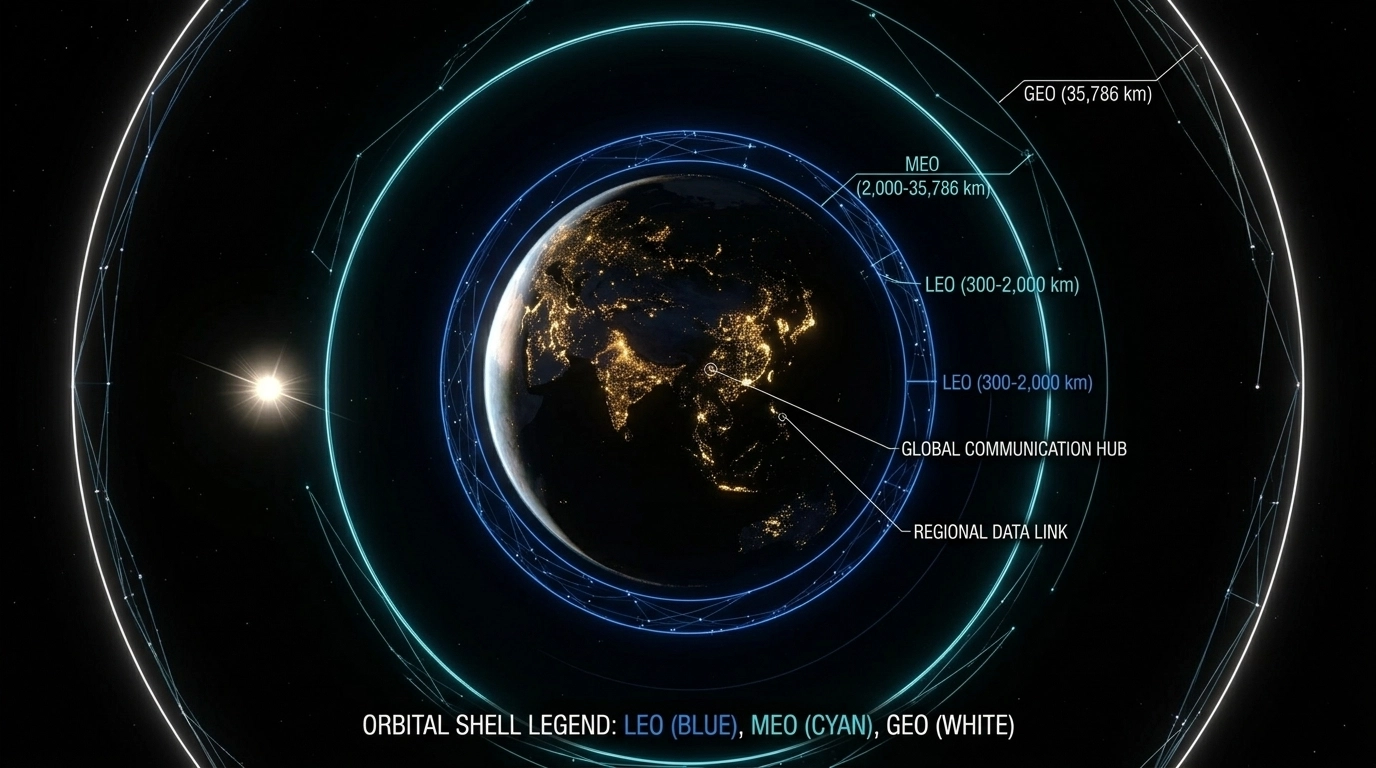
Key Characteristics of Orbital Shells:
Altitude: Different altitudes provide different levels of latency and field of view. Low Earth Orbit (LEO) shells are typically located between 400 km and 1,200 km.
Inclination: The angle of the orbit relative to the equator determines which parts of the Earth the satellites can observe.
Phasing: This refers to the spacing between satellites within the same shell. Proper phasing ensures continuous global coverage without gaps.
The Helvarix Orbital Platform allows users to model multiple orbital shells simultaneously. Designers can visualize how different shell configurations affect ground coverage and communication latency in real-time.
Swarm Intelligence and Autonomous Coordination
Swarm intelligence refers to the collective behavior of decentralized, self-organized systems. In the context of satellite constellations, this means the satellites can make decisions without direct instructions from ground control.
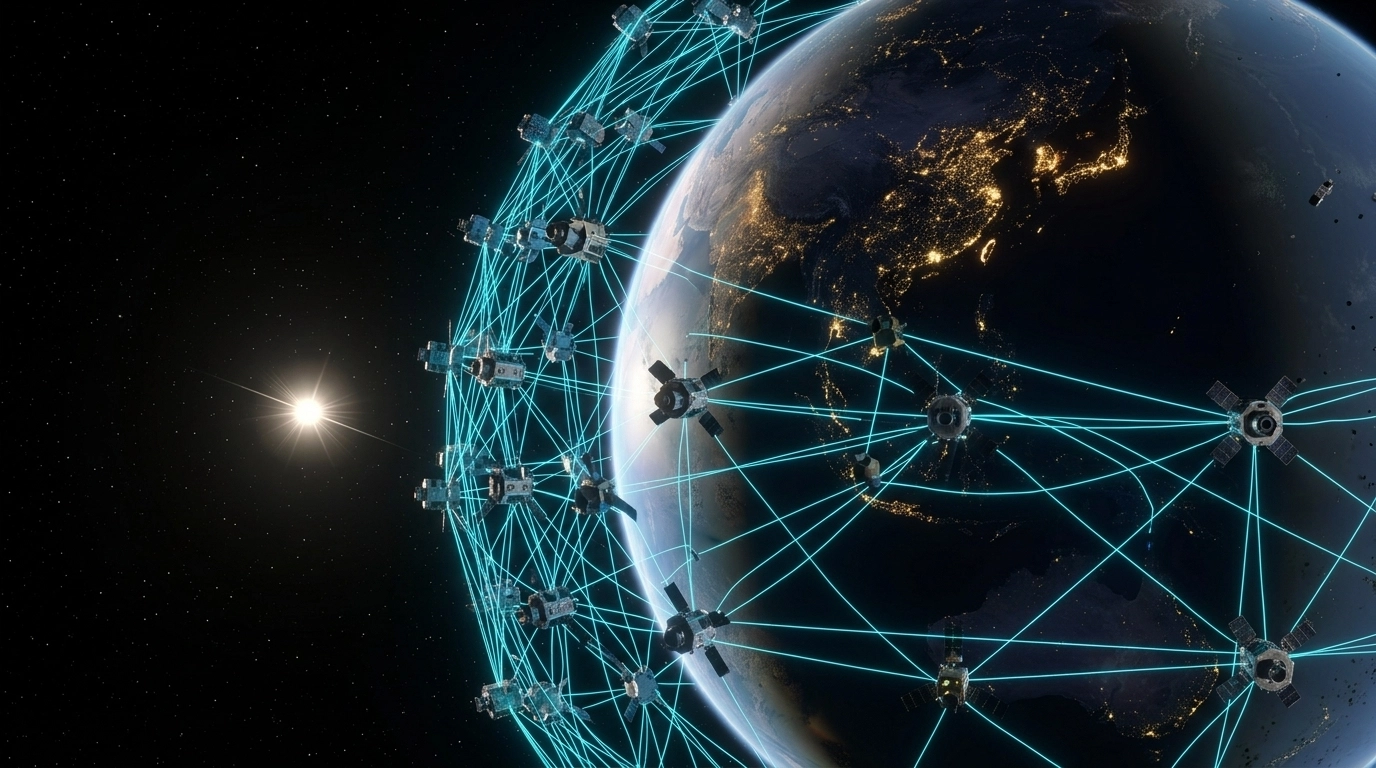
Autonomous Functions:
Collision Avoidance: Satellites use onboard sensors to detect nearby debris or other spacecraft and adjust their trajectories automatically.
Station Keeping: Swarms maintain their relative positions within an orbital shell to prevent drifting and ensure optimal sensor coverage.
Task Allocation: When a data collection requirement is identified, the swarm determines which satellite is in the best position to fulfill the request.
This autonomy reduces the operational burden on ground-based teams. It also increases the speed at which the system can respond to changes in the orbital environment.
Sensor Fusion: Integrating Multi-Modal Data
A primary advantage of a swarm is the ability to perform sensor fusion. Sensor fusion is the process of combining data from multiple sensors to produce a more accurate and comprehensive result than any single sensor could provide alone.
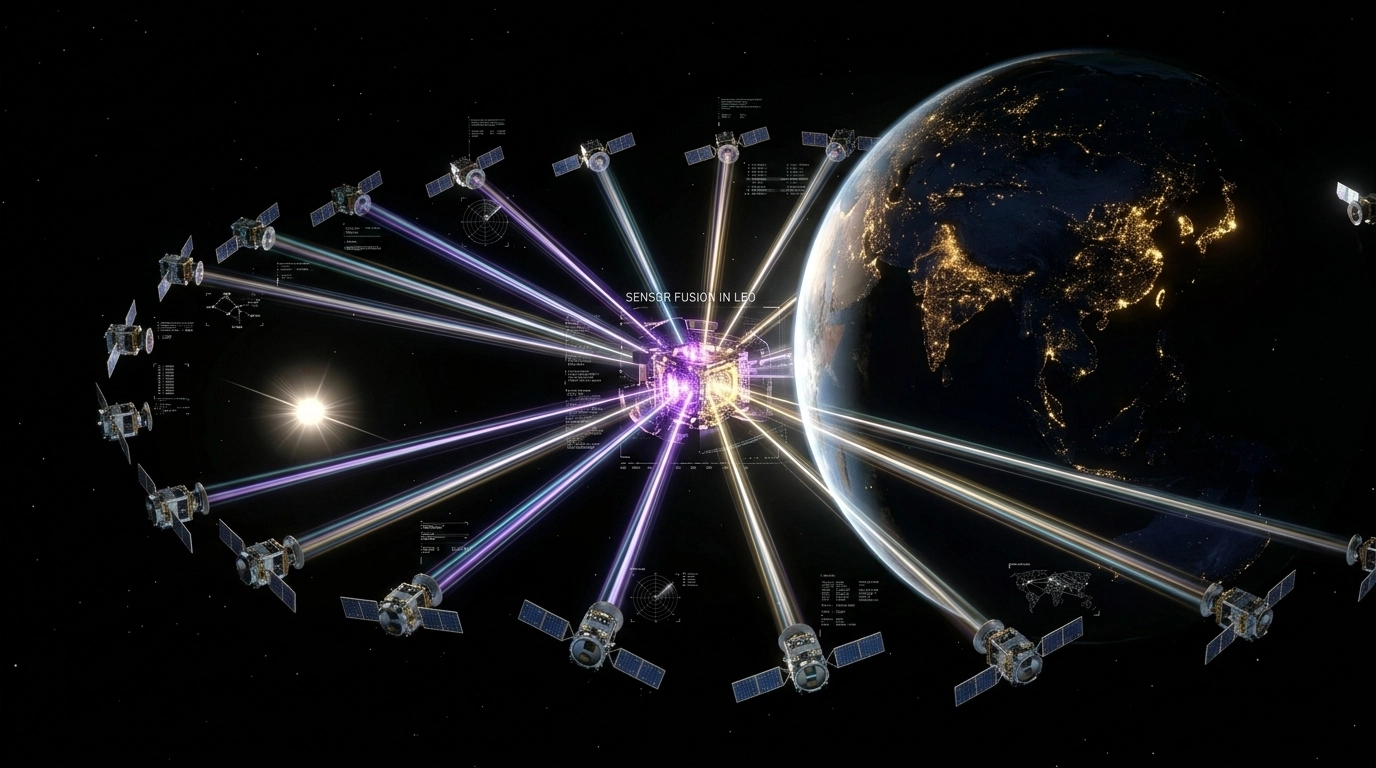
In a satellite swarm, different units may carry different types of sensors. For example, some satellites may utilize optical cameras while others use Synthetic Aperture Radar (SAR) or infrared sensors.
Benefits of Sensor Fusion:
Improved Accuracy: Overlapping data from multiple satellites reduces errors and increases the precision of orbital measurements.
Spectral Analysis: Combining data from different parts of the electromagnetic spectrum allows for more detailed analysis of terrestrial and celestial targets.
Resilience to Environmental Conditions: If cloud cover blocks optical sensors, radar sensors within the same swarm can continue to provide data, maintaining the continuity of the observation.
The Helvarix Global Array is designed to support these multi-modal workflows. It integrates data from distributed sensors across the network for collaborative analysis and research data export.
Designing for Resilience
Resilience is the capacity of a system to maintain its core functions despite disruptions. In satellite constellation design, resilience is achieved through redundancy and distributed architecture.
Redundancy: By deploying more satellites than are strictly necessary for the minimum mission requirements, the swarm can continue to operate at full capacity even if several units fail.
Graceful Degradation: If the swarm loses a significant number of units, the remaining satellites can adjust their orbits and tasks to provide a reduced but still functional level of service.
Decentralized Data Processing: Onboard processing allows the swarm to analyze data locally. This reduces the dependency on ground stations and prevents data bottlenecks.
Utilizing the Helvarix Orbital Platform
Designing a functional satellite swarm requires advanced simulation and visualization tools. The Helvarix Orbital Platform offers a suite of features for this purpose.
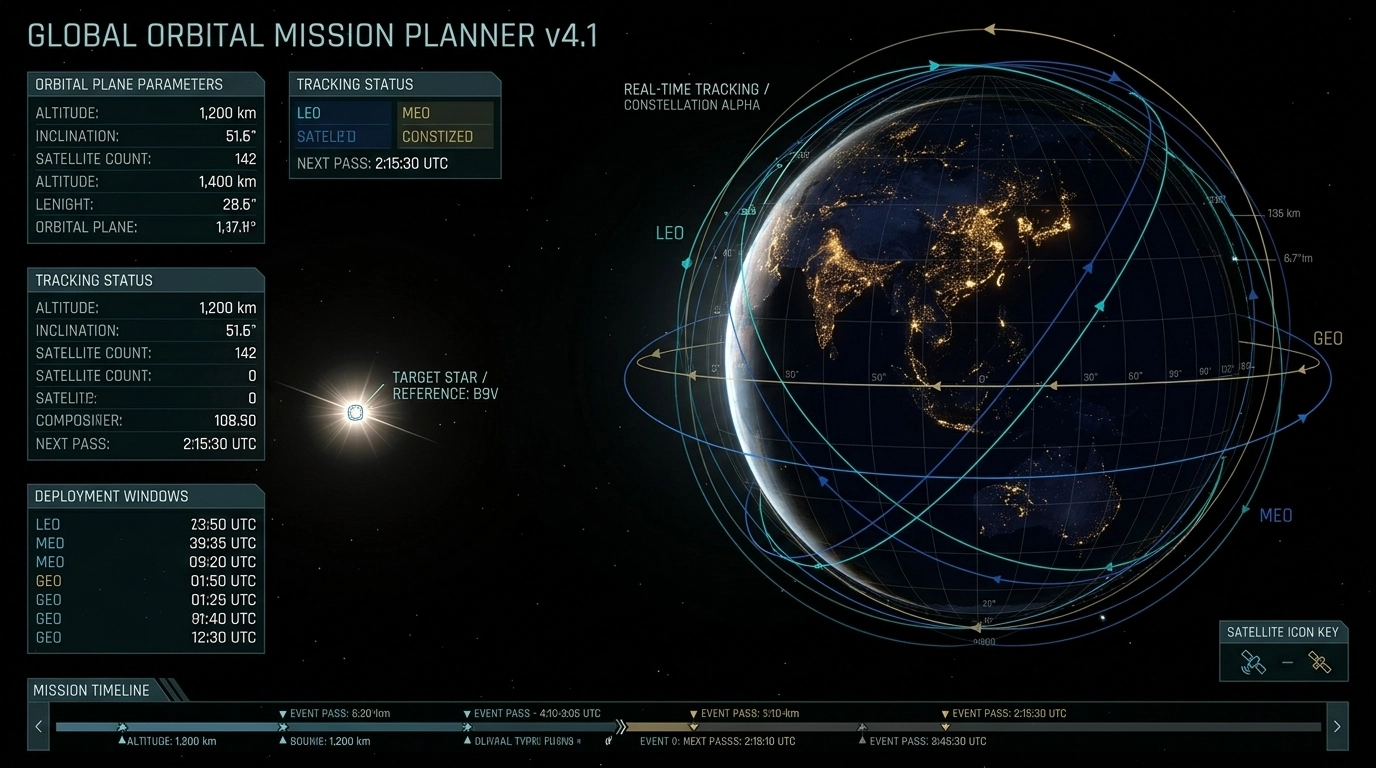
Platform Capabilities:
Interactive Visualization: View satellite tracks and constellation models in a high-resolution 3D environment.
Mission Planning: Model different launch scenarios and orbital deployments to find the most efficient configuration.
Real-Time Tracking: Monitor the position and health of existing satellites within your constellation.
Constellation Analysis: Evaluate the performance of your swarm against specific mission objectives, such as ground revisit times or data throughput.
These tools are essential for engineering teams and research institutions focused on next-generation space exploration. The ability to simulate complex orbital dynamics before launch reduces the risk of mission failure and optimizes resource allocation.
Conclusion
The shift toward satellite swarms represents a fundamental change in how space missions are designed and executed. By utilizing orbital shells, autonomous coordination, and sensor fusion, organizations can build constellations that are more resilient and capable than traditional single-satellite systems.
Helvarix Systems provides the infrastructure needed to navigate this new landscape. For more information on orbital modeling and simulation, visit the Helvarix Blog or explore our Technical Tools.
Comments