
Apophis 2029: Why This Asteroid Flyby is a Once-in-a-Lifetime Research Opportunity

On April 13, 2029, Apophis will pass within about 32,000 kilometers of Earth’s surface. That is closer than geostationary satellites, which are the spacecraft that appear fixed over one point on Earth and handle services like communications and weather coverage. In other words, this asteroid is not just passing by in the general neighborhood. It is making an unusually close visit.
The hero image here is a real NASA radar view of Apophis. That matters because radar imagery does not just look dramatic. It helps researchers resolve shape, surface structure, and rotation in ways ordinary visible-light images often cannot.
Apophis is roughly 340 to 370 meters wide. That makes it large enough to matter scientifically and close enough to study in unusual detail. Events like this are rare on human timescales, which is why researchers across astronomy, planetary science, and mission planning are treating it as a major moment for observation.
This is also why Apophis matters beyond headlines. It gives us a chance to watch how a near-Earth asteroid responds when it passes a planet at close range. That means better models, better measurements, and better preparation for future planetary defense work. To do that well, teams need reliable space observation software and strong space research infrastructure.
Why This Flyby Is a Big Deal
Apophis is not just another asteroid on a long list of tracked objects. It is a rare opportunity to watch a substantial near-Earth object interact with Earth’s gravity in real time. That is the kind of event researchers usually model on screens, debate in conference halls, and hope nature eventually provides for free.
This is especially valuable because Apophis is an S-type asteroid, which means it is a stony asteroid made mostly of silicate minerals and some metal. Think of it as a rocky object rather than an icy comet or a metal-heavy body. S-type asteroids are common in the inner solar system, but we do not often get to observe one this closely during such a dramatic flyby.
What We Are Looking For
One of the main questions is how Apophis changes as Earth pulls on it. Those pulls are called tidal forces. In simple terms, gravity does not tug on every part of the asteroid equally, so the side closer to Earth feels a slightly stronger pull than the far side. On a world with oceans, tidal forces help raise tides. On an asteroid, they can shake loose surface material, alter rotation, and reveal how loosely or tightly the object is held together.
Researchers will be looking for several effects:
Surface movement: Loose debris may shift across the asteroid. That debris is called regolith, which is the layer of dust, gravel, and broken rock sitting on the surface.
Internal structure clues: If Apophis flexes or responds in measurable ways, that tells us whether it behaves like a solid rock, a fractured body, or a rubble pile held together just well enough to stay intact.
Rotation changes: Earth’s gravity may slightly change how fast Apophis spins or how its spin axis is tilted.
Why Orbit Changes Matter
Researchers also care about what happens after the flyby. Asteroids do not move only because of gravity. Over long periods, small forces matter too. One of the most important is the Yarkovsky effect. It sounds complicated, but the idea is simple: sunlight warms an asteroid, and later that heat is released back into space. That release acts like a tiny push. Tiny is the key word here, but given enough time, tiny pushes can move an asteroid a meaningful distance.
That is why precise tracking before, during, and after the flyby matters so much. Apophis gives scientists a rare chance to compare old orbit models with new measurements and improve long-term predictions. For planetary defense, that is not trivia. That is the job.

How We Actually See It
Watching Apophis is not as simple as pointing one telescope at the sky and hoping for the best. It will move quickly, observation windows will vary by location, and different instruments will answer different scientific questions. This is where coordinated observation becomes less of a nice idea and more of a requirement.
Spectral Analysis
The image above is a real Hubble capture, and while it is not an image of Apophis itself, it is a useful reminder of what high-quality space-based observation can reveal. One of the most useful tools during the flyby is spectral analysis. That means studying how the asteroid reflects and emits different wavelengths of light. In plain language, researchers break the light into a kind of fingerprint to infer what minerals are present on the surface.
That helps teams:
Identify silicate-rich materials expected on S-type asteroids.
Track how surface composition appears to change as Apophis rotates.
Look for unusual compounds that deserve closer study.
Photometry and Radar
Researchers will also rely on photometry, which is the measurement of how an object’s brightness changes over time. If the light rises and falls in a pattern, that pattern helps estimate the asteroid’s shape and spin. It is a practical method with a very unglamorous name, which is common in astronomy.
Radar adds another layer. By bouncing radio signals off Apophis and measuring the return, teams can build detailed 3D models of its shape and surface structure. Combined with photometry, radar helps answer a basic but important question: what exactly are we dealing with?
The use of advanced tech tools is necessary to process these large datasets in real time. Ground-based radar facilities will work in conjunction with orbital sensors to provide continuous coverage.
Coordinating a Global Campaign
The real observatory image above fits the operational side of this problem. Seeing Apophis is one thing, but seeing it continuously is another. Earth rotates. Weather interferes. Daylight gets in the way. Instruments have different capabilities. No single observatory can do the whole job.
That is why the Apophis flyby has to be treated as a global campaign.
Shared Observatory Networks
Different sites contribute different data types:
Optical telescopes for position tracking and photometry.
Infrared sensors for thermal measurements tied to the Yarkovsky effect.
Radar systems for structural imaging and shape models.
A shared observatory network lets one site hand off coverage to the next. It also prevents the classic scientific problem of ten teams measuring the same easy thing while nobody catches the critical moment.
Data Standardization and Export
Large campaigns only work if the data can actually be combined. That means timestamps must match, metadata must be consistent, and file formats must be usable across institutions. This is where space research infrastructure stops being a background detail and becomes part of the science itself.
The Role of Space Research Infrastructure
The trajectory makes the point clearly: a close approach is dynamic, fast, and geometry-heavy. Teams need to know where Apophis is, where it will be next, and which sensors should be on target at each stage of the event.
Real-Time Visualization
Researchers use visualization tools to monitor the asteroid’s path relative to Earth and surrounding satellite traffic. This supports sensor planning, coordination, and awareness across distributed teams. In practice, good visualization reduces missed windows and bad assumptions.
Performance Analytics
Observation campaigns also depend on knowing whether the instruments are behaving properly. Real-time performance analytics help teams detect sensor drift, weak signal quality, or local interference before those issues affect the entire dataset.

Planetary Defense and Mission Planning
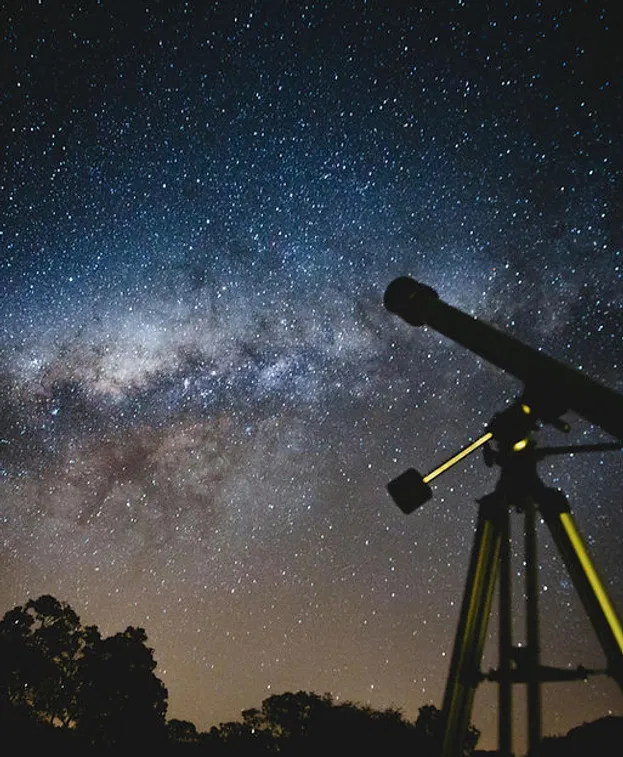
The star field image above is a real astronomical capture, and it helps ground this section in the broader observational context. Apophis is also important because close studies like this improve future planetary defense planning. If you want to predict how hazardous objects move, respond to stress, or change over time, this is the kind of real-world case you want in your dataset.
OSIRIS-APEX Mission
NASA’s OSIRIS-APEX spacecraft is planned to arrive at Apophis in June 2029. It will map the surface and study the asteroid over an extended period. Part of the mission includes disturbing surface regolith with thrusters to see how the material responds. That gives researchers direct insight into surface mechanics rather than educated guesswork.
Ramses Mission
ESA’s Ramses mission is designed to observe Apophis before and during the close encounter. That before-and-after comparison is scientifically valuable because it helps isolate what Earth’s tidal forces changed during the flyby.
Successful coordination between these missions and ground-based observers requires a unified communication and data-sharing platform. You can find more information on these systems at Helvarix Systems.
Conclusion and Future Expectations
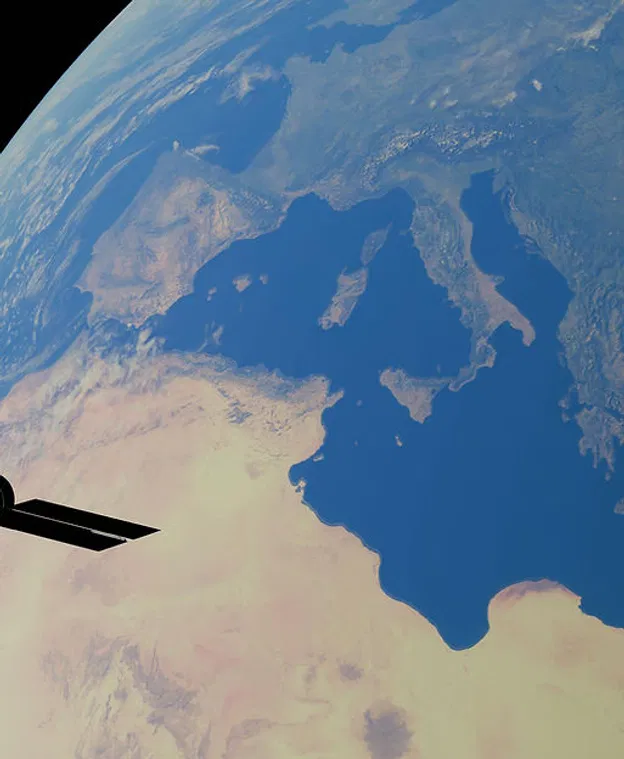
The satellite view above is also a real-world image, which is a good fit for the final point: asteroid science is not abstract. It depends on actual instruments, actual networks, and actual observation campaigns. Apophis is a rare case where timing, proximity, and scientific value all line up. It is a close flyby, but it is also a chance to learn how an asteroid behaves under stress, how its orbit evolves, and how well the global research community can work together under real observation constraints.
That is what makes it more than a spectacle. It is a live test of observation strategy, instrumentation, coordination, and analysis. If teams get this right, the result will be better models, better mission planning, and better readiness for future asteroid events.
In future posts, you can expect detailed updates on specific sensor configurations and data processing workflows for the Apophis campaign. We will provide technical guides on optimizing orbital visualization for high-velocity near-Earth objects.
Helvarix Global Array
The Helvarix Global Array is built for exactly this kind of campaign. Apophis will require telescopes, radar systems, analysts, and partner institutions to work as one coordinated network rather than as isolated sites comparing notes afterward.
The platform supports:
Campaign Coordination: Synchronize observation sites across regions for continuous tracking.
Precision Orbital and Spectral Analysis: Work with integrated tools for trajectory modeling and surface composition analysis.
Shared Observatory Networks: Connect distributed partners through unified space research infrastructure.
Research Data Export: Share standardized datasets across teams without rebuilding workflows each time.
For organizations preparing for the Apophis encounter, Helvarix Global Array provides the operational layer that helps turn a major celestial event into a usable scientific campaign. If you are building or scaling observation programs with space observation software, visit our all products page.
Comments